
When is the Best Time to Do Walk in Cooler Maintenance?
Updated: Mar 18

If your business relies on a walk-in cooler, you already know how quickly things can go sideways when it stops working.
One minute everything’s running like normal, then all of a sudden you’re dealing with rising temps, stressed staff, and expensive products on the line.
So it makes sense that a lot of owners ask: When is the best time to do walk-in cooler maintenance?
The short answer? You should schedule maintenance before you actually need it. But let’s get a little more specific so you can plan it right and avoid future headaches.

Why Timing Matters More Than You Think
Most people are too busy to think about their cooler until there’s a problem. That’s normal, but it’s also where things get expensive.
Walk-in coolers run nonstop. Over time, coils get dirty, fans wear down, and small issues accumulate. If you wait too long, those small problems turn into:
Higher energy bills
Inconsistent temperatures
Emergency repairs at the worst possible time
And let’s be honest, refrigerator breakdowns won't wait for a slow day; they come when you least expect.
That’s why getting ahead of maintenance is such a big deal.
When is the Best Time to Do Walk-in Cooler Maintenance?
There’s no one-size-fits-all answer, but there are a few times that work best for a busy schedule.
1. During Your Slow Hours
If you can schedule maintenance when your business is quiet, do it.
Early mornings, late evenings, or overnight. Whenever you have “downtime,” use it.
This gives technicians the space to actually do their job without:
Staff opening doors every few minutes
The product is constantly being moved in and out
Pressure to rush through the inspection
Downtime inspections give technicians the chance to really look things over without interruptions, so small issues don’t get overlooked.
2. Right Before Your Busy Season
This is probably the most important one.
If your business ramps up in the summer (most do), that’s when your cooler is under the most stress. The last thing you want is to discover a problem after you get busy.
Getting maintenance done ahead of time means:
Your system is ready for higher demand
You’re less likely to deal with an outage
You avoid emergency service calls during peak hours
The same idea applies before holidays or big sales periods. If you know things are about to get busy, it’s worth getting ahead of it.
3. Twice a Year Is the Bare Minimum
If you don’t already have a schedule, start here.
A simple, solid approach is:
Once in the spring
Once in the fall
Spring service gets you ready for the heat. Fall service helps fix any wear from the summer.
It’s not complicated, but it works.
4. Anytime Something Feels Off
This one’s more instinct than schedule.
If you notice things like:
Ice is building up where it shouldn’t
Strange noises
Doors are not sealing the way they used to
Don’t wait until your next scheduled maintenance; get it checked out now.
Catching issues early is cheaper than fixing them later.
What Actually Gets Checked During Maintenance?
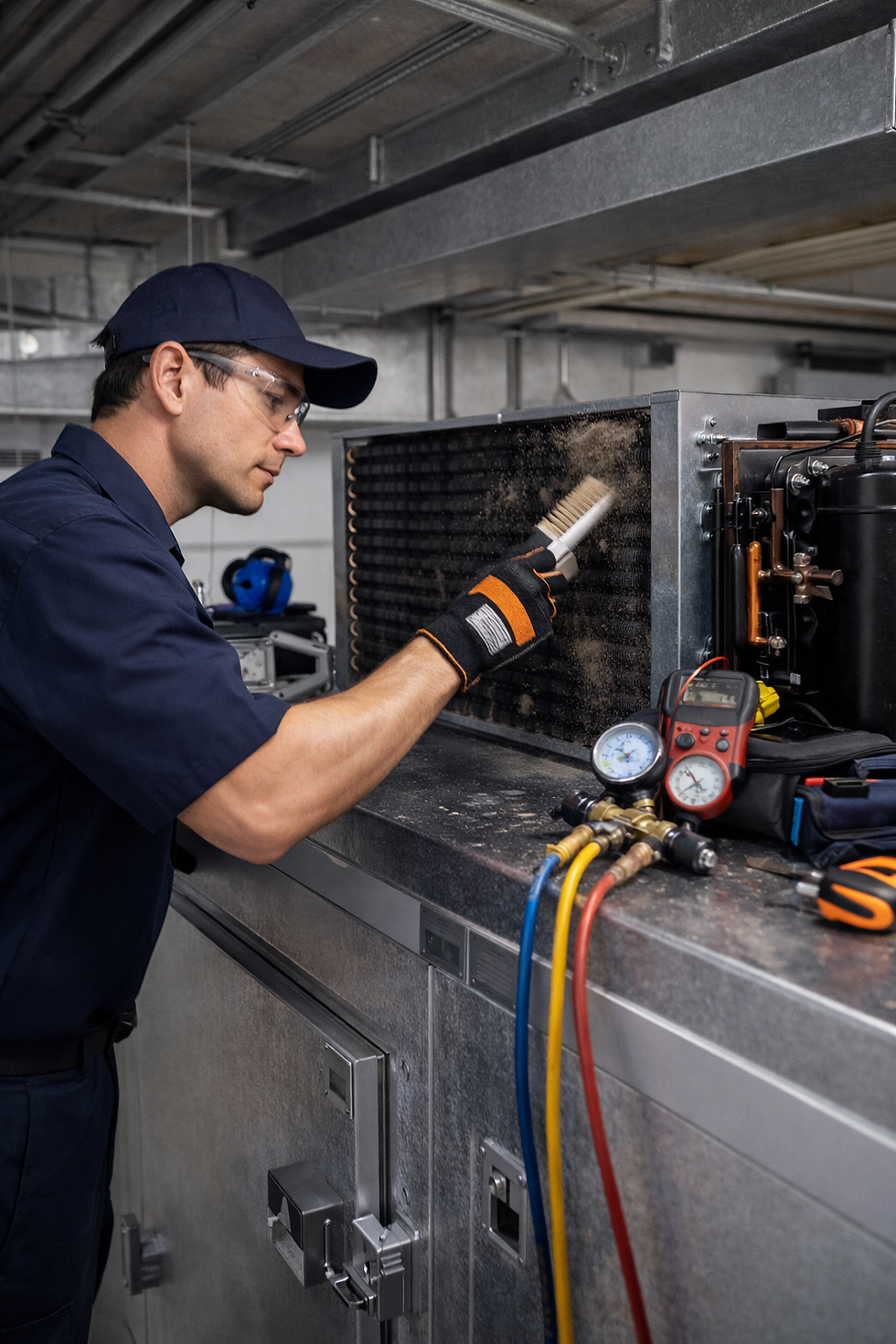
If you’ve ever wondered what a technician is doing during a service visit, here’s a quick breakdown.
Cleaning the Condenser Coils
Dirty coils make your system work harder than it should. Cleaning them improves efficiency and helps lower energy use.
Checking Door Seals
If your door gasket isn’t sealing properly, cold air escapes. That means higher bills and more strain on your unit.
Inspecting Fans and Airflow
Good airflow keeps temperatures consistent. If a fan isn’t working right, you’ll start seeing uneven cooling.
Looking at Refrigerant Levels
Low refrigerant levels can lead to more serious system problems if ignored. This is one of those things you definitely want a professional handling.
If you want a deeper look at regulations and best practices, the EPA guidelines on managing refrigeration and AC equipment are a great place to start.
For food safety standards, the FDA Food Code is also a solid reference.
A Simple Maintenance Rhythm That Works
If you’re trying to keep things organized without overthinking it, this is a good baseline:
Monthly (quick checks):
Look at door seals
Make sure temps are consistent
Wipe down interior surfaces
Twice a year (professional service):
Full system inspection
Coil cleaning
Refrigerant check
That alone puts you ahead of many businesses.
Mistakes That End Up Costing You
We see the same issues come up again and again:
Waiting until something breaks
Skipping seasonal maintenance
Ignoring small warning signs
Scheduling service during peak hours
None of these seem like a big deal now, but they add up fast.
Conclusion
So, when is the best time to do walk-in cooler maintenance?
It comes down to doing it:
during slow hours, before your busy season, and on a consistent schedule.
If you stay ahead of it, you’ll deal with fewer surprises, lower costs, and a lot less stress when things get busy.
And in this line of work, that’s a win.


Comments