
Maintaining Your Walk-In Cooler: Essential Tips for Peak Performance

If you run a business that relies on refrigeration, you know how important it is to maintain your walk-in cooler. It protects your inventory, keeps food safe, and ensures your business runs smoothly. But like any equipment, it needs regular care.
In this article, we’ll break down the key steps for maintaining your walk-in cooler to keep it efficient, safe, and long-lasting. Let’s keep things simple.
Why Walk-In Cooler Maintenance Matters
Your walk-in cooler is a big investment. With regular maintenance, you will:
Prevent unexpected breakdowns.
Save on energy costs.
Extend the life of your equipment.
Keep food at safe temperatures.
Neglecting it can lead to spoiled inventory, safety risks, and expensive repairs. Think of maintenance as insurance for your cooler and your business.
Daily and Weekly Walk-In Cooler Tasks
1. Check the Temperature
The most important thing to monitor is your cooler’s internal temperature. It should typically stay between 35°F and 38°F. Use a digital thermometer to verify readings and check it daily.
If the temperature starts to creep up, it could signal a problem with the compressor, thermostat, or seals.

2. Inspect the Door Seals
Door gaskets are often overlooked but essential. A broken seal can let cold air escape and warm air in, making your system work harder.
Run your hand around the door seal while the cooler is running. If you feel cool air leaking, it’s time for a replacement. The sooner you catch a leak, the better.
3. Clean Up Spills Immediately
Even a small spill can become a safety hazard or attract mold and bacteria. Wipe up any leaks or puddles as soon as you see them. Use a mild cleaner that won’t damage the cooler walls or floor.
Monthly Walk-In Cooler Maintenance
1. Clean the Condenser Coils
Over time, the condenser coils collect dust and debris. Dirty coils reduce efficiency and can cause overheating.
Turn off the unit and gently clean the coils with a brush or vacuum. If they’re really dirty or neglected, a professional may need to clean them.
Tip: Always follow the manufacturer's instructions and unplug the unit before cleaning.
2. Clear the Drain Lines
Walk-in coolers have drain lines to carry away condensation. If these get clogged, you might notice standing water or ice buildup.
Use a stiff brush or drain cleaner once a month to keep them clear. If water is pooling on the floor, check the drain line first.
Seasonal or Quarterly Maintenance
1. Check for Ice Buildup
Ice on the evaporator coils or inside the cooler isn’t normal. It can block airflow, forcing the system to work harder.
If you see ice buildup, don’t just chip it off. Find out what’s causing it; it’s often a humidity issue or a faulty defrost timer.
2. Inspect the Door Hardware
Heavy use can wear out hinges, latches, and closers. If the door isn’t shutting tightly or is sagging, it may need adjustment or replacement parts. A properly sealed door is critical for temperature control.
3. Review Inventory Practices
Overloading your walk-in cooler can restrict airflow. Make sure items aren’t stacked against the walls or vents. Rotate stock to reduce spoilage and avoid blocking cold air flow.
Professional Walk-In Cooler Maintenance
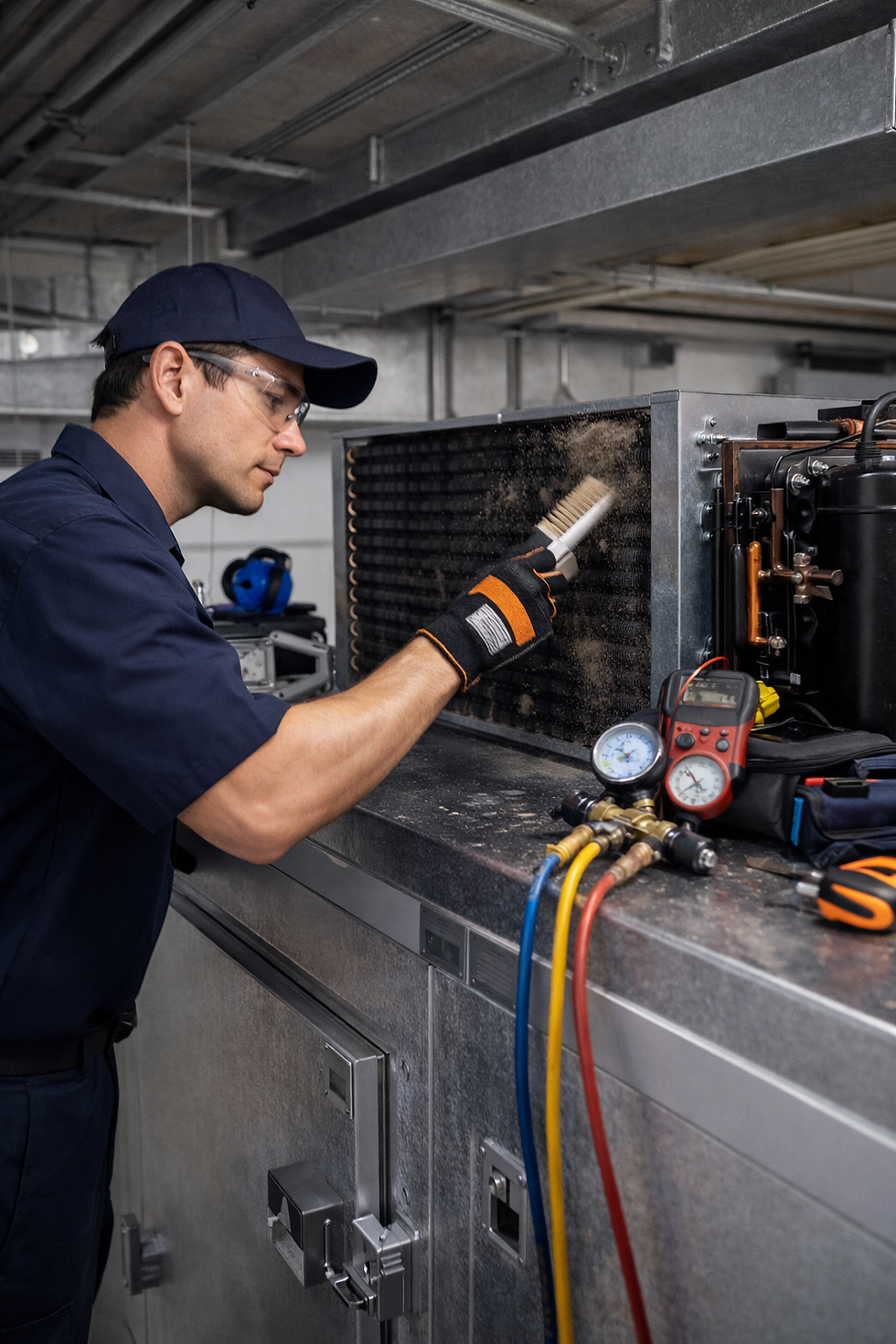
Even if you’re doing all the routine upkeep, you should schedule a professional inspection at least once a year. A technician will:
Check refrigerant levels.
Test electrical components.
Calibrate controls.
Ensure fan motors and compressors are running efficiently.
This deep check-up can catch small issues before they become big problems. In the long run, it can save you time and money on expensive repairs.
You can read more on the EPA’s Refrigeration Maintenance Resources for professional guidance.
Energy Efficiency Tips
Keeping your cooler running well isn’t just about safety; it affects your utility bills. Here are a few ways to boost efficiency:
Keep the door closed: Don’t prop it open when unloading. Consider installing strip curtains to help seal in cold air.
Use LED lighting: LEDs give off less heat than fluorescent bulbs and use less energy.
Set up an alert system: Many walk-in coolers can be equipped with alarms for temperature changes or door-ajar events.
Want more energy-saving ideas? Check out Tips to Increase Energy Efficiency for Commercial Refrigeration.
Common Signs Your Walk-In Cooler Needs Help
Catch issues early by watching for these red flags:
Fluctuating or rising temperatures.
Ice buildup or water pooling.
Strange noises from the motor or fans.
Door not sealing tightly.
Unusual smells or mold.
If you notice any of these, it’s time to call a refrigeration repair technician.
Final Thoughts
Maintaining your walk-in cooler doesn’t have to be complicated. With a regular routine and a little attention to detail, you can keep your equipment running smoothly for years.
Whether it’s cleaning the coils, checking temperatures, or booking an annual check-up, the effort you put in now will pay off with fewer breakdowns and better performance.
We’re here to help keep your cooling systems efficient and reliable. Don’t wait for a breakdown; make maintenance a part of your routine.
FAQ: Walk-In Cooler Maintenance
How often should I clean my walk-in cooler coils?
At least once a month, or more often if you're in a dusty environment.
What temperature should a walk-in cooler be?
Between 35°F and 38°F is ideal for most food storage.
Can I do walk-in cooler maintenance myself?
Yes! Many tasks, like cleaning, checking seals, and monitoring temperature, can be done in-house. But always schedule a pro for annual inspections of large repairs.


Comments