
Indoor vs Outdoor Walk-In Coolers: Which One Is Right for Your Business?

Choosing between an indoor or outdoor walk-in cooler is one of the first big decisions you’ll make when setting up cold storage.
At first glance, it feels like a simple choice. Put it inside or put it outside.
But in reality, this decision affects your cost, efficiency, workflow, and long-term maintenance.
Get it right, and everything runs smoothly. Get it wrong, and it becomes a daily frustration.
Let’s break it down in a way that actually helps you decide.
What Is an Indoor Walk-In Cooler?
An indoor walk-in cooler is installed inside your building, usually in a kitchen, back room, or storage area.
These are common in:
Restaurants
Cafes
Convenience stores
Food prep facilities
They’re popular because they’re easy to access and fit naturally into daily operations.
What Is an Outdoor Walk-In Cooler?
An outdoor walk-in cooler is installed outside your building, typically behind or beside your business.
These are built to handle weather and temperature changes.
They’re often used when:
Indoor space is limited
Storage needs are growing
Businesses want to avoid remodeling
The Real Differences That Matter
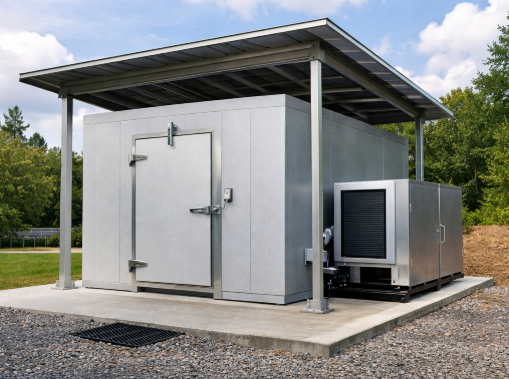
1. Space and Layout
Indoor coolers take up valuable interior space. That might not seem like a big deal until your kitchen starts feeling cramped.
Outdoor units completely free up that space.
If you’re already tight on room, this becomes one of the biggest deciding factors.
2. Installation Complexity
Indoor coolers are simpler to install. You’re working in a controlled environment, and there’s no need to worry about weatherproofing.
Outdoor coolers require more planning:
Weather-resistant materials
Proper drainage
Reinforced insulation
Roofing or protection
If you're researching a walk-in cooler installation, outdoor units almost always require more upfront cost.
3. Temperature Efficiency
Indoor coolers have a big advantage here.
Because they’re inside, they benefit from stable surrounding temperatures. That means the refrigeration system doesn’t have to work as hard.
Outdoor units deal with:
Hot summers
Cold winters
Temperature swings
That added stress can impact efficiency over time.
For general refrigeration efficiency standards, you can reference the U.S. Department of Energy.
4. Maintenance Requirements
Indoor coolers are easier to maintain. They stay cleaner and are protected from the elements.
Outdoor coolers need more attention:
Checking seals after weather exposure
Clearing debris
Monitoring insulation
5. Daily Workflow
This is where many businesses underestimate the impact.
Indoor coolers are convenient. Staff can grab what they need quickly without leaving the building.
Outdoor coolers require stepping outside, which can slow things down, especially:
During busy hours
In bad weather
It may not seem like much, but over time, it adds up.
6. Cost Considerations
Indoor coolers usually cost less upfront if your space is already set up.
Outdoor coolers tend to cost more due to:
Stronger materials
Installation requirements
Weatherproofing
But they can save money by avoiding expensive interior renovations.
So, Which One Should You Choose?
It comes down to how your business operates.
Choose indoor if:
You have available space
You want faster access
You want better efficiency
You prefer simpler maintenance
Choose outdoor if:
You’re tight on space
You need more storage
You want to avoid remodeling
You’re planning for growth
A Simple Way to Decide
Ask yourself:
How often will staff need access?
Do I have room inside?
Am I planning to expand?
What’s my climate like year-round?
Answer those honestly, and the decision becomes much clearer.
Final Thoughts
Both indoor and outdoor walk-in coolers can work well. The key is choosing the one that fits your space, workflow, and long-term plans.
Most problems don’t come from the cooler itself. They come from choosing the wrong setup for how the business actually runs.
Take a little extra time upfront, and you’ll avoid a lot of headaches later.


Comments