
Temporary Cold Storage: Trailer vs Container vs Walk-In Rental
Temporary Cold Storage: Which Option Is Right for Your Situation?
Temporary cold storage comes in three forms, and picking the wrong one is expensive. If your product needs to move, rent a trailer. If it needs to sit for months, rent a container or a portable walk-in. If it needs to go inside, a portable walk-in is usually the only option that fits.
The Quick Decision Guide

Do You Need Frozen or Refrigerated Storage?
This question should be answered before you start comparing options, because it changes which units will work and how much power you need. Refrigerated storage generally holds product in the mid 30s. Frozen storage generally holds at 0°F or below. These thresholds line up with federal food storage temperature guidance. Most equipment is built for one or the other.
You cannot turn a cooler into a freezer. A unit configured as a cooler does not have the compressor capacity, the insulation, or the defrost system to reach freezer temperatures. Turning the thermostat down will make it run constantly and shorten the life of the equipment. If you have frozen product, say so when you request the unit.
What each option can do
Refrigerated trailers and refrigerated containers are usually capable of both cooler and freezer temperatures, since they are built for transporting frozen freight. Confirm the range with the rental company rather than assuming. Portable walk-ins come in cooler and freezer configurations. Both are available, but they are different units and the freezer version costs more to rent and uses more power. If you need frozen storage, walk-in freezer rentals are configured and sized differently from the cooler equivalent.
Emergency Situations: What to Do in the First Hour
When a cooler or freezer fails, keep the doors closed as much as possible. Check and record the internal temperature and contact a refrigeration technician and plan backup storage. Move the most temperature-sensitive products first. Don't overload the temporary unit because it can block airflow, causing uneven temperatures. Document the temperature throughout the emergency and be sure to follow food safety or product handling rules that may apply. The USDA publishes guidance on keeping food safe during emergencies which covers evaluating products after a temperature event (although the timeframes given apply to household appliances rather than commercial walk-ins). Our guide to walk-in coolers during a power outage explains additional steps.
Refrigerated Trailers (Reefer Trailers)
A refrigerated trailer is a mobile cold storage trailer with an attached refrigeration system. It can be transported, loaded with products, then moved again when needed.

How Refrigerated Trailers Work
The refrigeration unit maintains the selected temperature inside the trailer. Many units are powered by diesel fuel, but others may connect to electrical standby power while parked. Trailers are typically backed into a loading area so people can move products in and out.
Best Uses for a Refrigerated Trailer
Refrigerated trailers work well when products need to be transported or when a business needs outdoor storage for a limited period. Common uses include:
Restaurant and grocery store emergencies
Food transportation
Catering and festivals
Disaster recovery
Seasonal inventory
Temporary storage during equipment repairs
Limitations
Tight parking lots, narrow alleys, and low overhead clearances can create delivery problems. Diesel-powered units produce noise and exhaust. Fuel adds to the ongoing cost, especially when the refrigeration system needs to run 24/7. Trailers are above ground level, so stairs, ramps, or loading docks may be needed for safe access.
Typical Rental Terms
Refrigerated trailers may be rented by the day, week, or month. The total price may include delivery, pickup, mileage, fuel, and cleaning fees. For more information about the equipment itself, read our guide explaining what a refrigerated trailer is.
Refrigerated Shipping Containers (Reefer Container)
A refrigerated shipping container is an insulated steel container with a refrigeration system. Unlike a trailer, it’s usually placed in one location and stays there for the entire rental period.

How Refrigerated Containers Work
Refrigerated containers use an electric refrigeration unit to control the temperature inside the container. They’re built for outdoor conditions and can hold a large amount of inventory. Most containers are delivered by a truck, crane, or roll-off system.
Best Uses for Refrigerated Containers
Containers are commonly used for:
Long-term outdoor cold storage
Construction projects
Seasonal agriculture
Food processing
Distribution centers
Overflow inventory
Grocery and restaurant renovations
Their large capacity makes them useful when more space is needed.
Limitations
A refrigerated container needs to be placed on a flat, stable surface; otherwise, an uneven placement can affect the doors, drainage, and airflow. Delivery can be difficult as there must be enough room for the truck and equipment used to place the container. Power is another concern. Some refrigerated containers require three-phase electrical service, which many small businesses and temporary sites don’t have. A generator or electrical work may be needed.
20-Foot vs. 40-Foot Containers
A 20-foot container is easier to place and may be enough for a restaurant, farm, or construction project. A 40-foot container provides more storage but requires more space, power, and delivery access.
Portable and Rental Walk-In Coolers
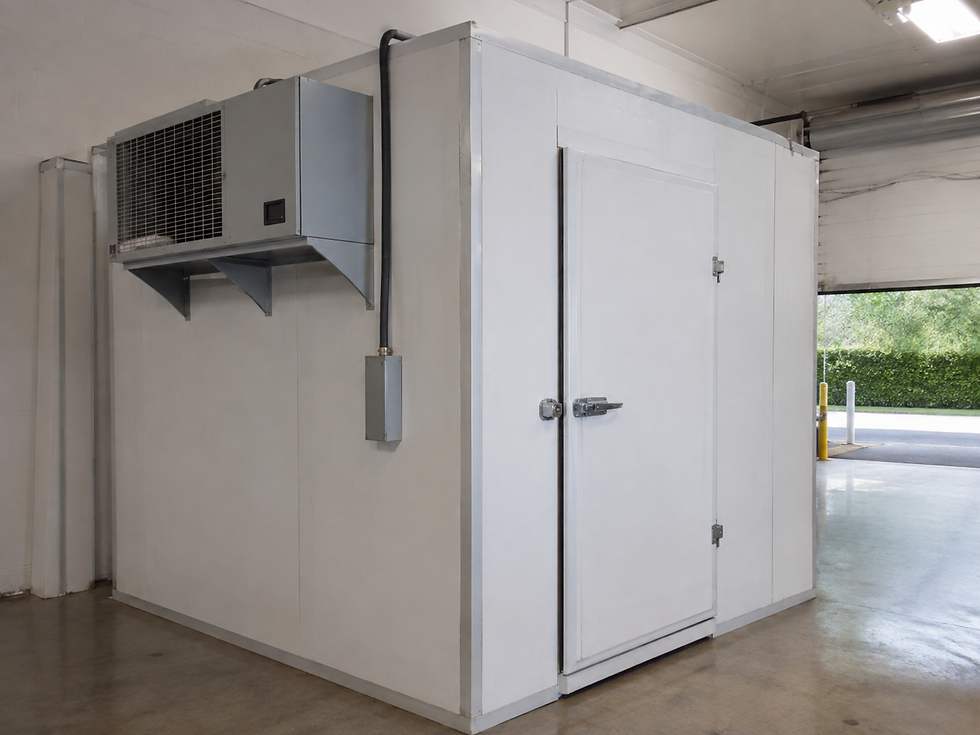
A portable walk-in cooler provides temporary refrigeration space without requiring a permanent installation. Touchstone offers walk-in cooler rentals that can be configured for your space and timeline.
How Portable Walk-Ins Work
Insulated wall, ceiling, and floor panels create a sealed cold room. A refrigeration system removes heat and maintains the required temperature. Because modular units can be assembled in sections, they may fit inside buildings and areas that a trailer or shipping container cannot reach.
Best Uses for Portable Walk-Ins
Portable walk-ins are often a strong choice for:
Restaurant emergencies
Kitchen renovations
Grocery stores
Indoor food storage
Medical and laboratory storage
Weddings and catered events
Temporary production areas
Businesses replacing a permanent walk-in
They can also provide easier ground-level access than a trailer.
Limitations
Portable walk-ins still need a suitable location, proper ventilation, drainage, and electrical power. The site should be measured before delivery, such as doorways, hallways, etc., because they can affect the size and placement of the unit.
How Quickly Can One Be On Site?
It may be delivered same-day or next-day, but it also depends on unit availability, delivery distance, and site access. A simple outdoor unit may be placed quickly, whereas an indoor walk-in can take longer because the panels and refrigeration system may need to be assembled on-site. Before a rental company can commit to a timeline, they will usually need the desired temperature, storage volume, rental length, and site power information.
Power Requirements Nobody Warns You About
Power problems are one of the most common reasons temporary cold storage projects become so expensive. Before you rent one, ask for the unit's required voltage, amperage, and electrical phase. Common commercial equipment may use 208-volt, 230-volt, or 460-volt power. Some units require three-phase service, while others can operate on single-phase power. An electrician may need to confirm the site's capacity and install the correct disconnect, breaker, receptacle, or wiring.
What Drives the Cost of Temporary Cold Storage?
Rental pricing varies widely by region, season, and equipment availability, so the more useful question to think about is "what am I actually being charged for?"
What sets the base rate
Unit type: Trailers, containers, and portable walk-ins price differently and are not directly comparable.
Size: A 40-foot container and a 20-foot container are not close in price.
Temperature: Freezer configurations cost more to rent than cooler configurations.
Duration: Monthly rates almost always work out to a far lower daily cost than day or week rates. If you're unsure, ask what the monthly rate would be.
Season: Demand is higher during harvest, summer, and holidays, and pricing follows.
The costs that are not in the base rate
Ask about these specifically:
Delivery and pickup, often billed separately
Mileage beyond a set radius
Fuel, for diesel-powered trailers running continuously
Electrical work to supply the correct voltage, phase, and disconnect
Generator rental if the site cannot supply the required power
Pad or site preparation for containers
Cleaning fees on return
Damage waiver or insurance
After hours or emergency delivery surcharges
How to compare quotes fairly
Ask for the total delivered cost across your full rental period rather than the daily rate. Then ask what is not included. A quote that comes in noticeably lower than the others has usually moved something into your column, and it is almost always electrical work.
How Long Do You Actually Need It?
Cold storage rental makes sense when there is an emergency, remodeling, seasonal demand, or a short-term project, but buying may be worth considering when the equipment is being used repeatedly or for an extended period. For comparing the purchase cost, review our guide covering walk-in cooler costs.
Choosing the Right Temporary Cold Storage Option
The right cold storage option depends on how long you need it, where it will be placed, how much product you need to store, and what power is available at the site. Refrigerated trailers are best for mobility, refrigerated containers work well for outdoor use, and portable walk-in coolers are best for indoor space.
Get a Temporary Cold Storage Unit On-Site
Need temporary cold storage for an equipment failure, renovation, event, or seasonal project? Contact our team with your location, required temperature, estimated storage volume, and rental timeframe.


Comments